

Search Engine Optimization has fundamentally shifted. If you are noticing a sudden drop in website traffic, shrinking organic leads, or a complete loss of keyword rankings despite publishing content regularly, you are not alone. Business owners and marketers worldwide are facing the same frustration. The reality is that the tactics that worked flawlessly in 2023 or 2024 are now actively harming your website’s visibility. In the era of AI-driven search, relying on outdated strategies is the fastest way to become invisible online.
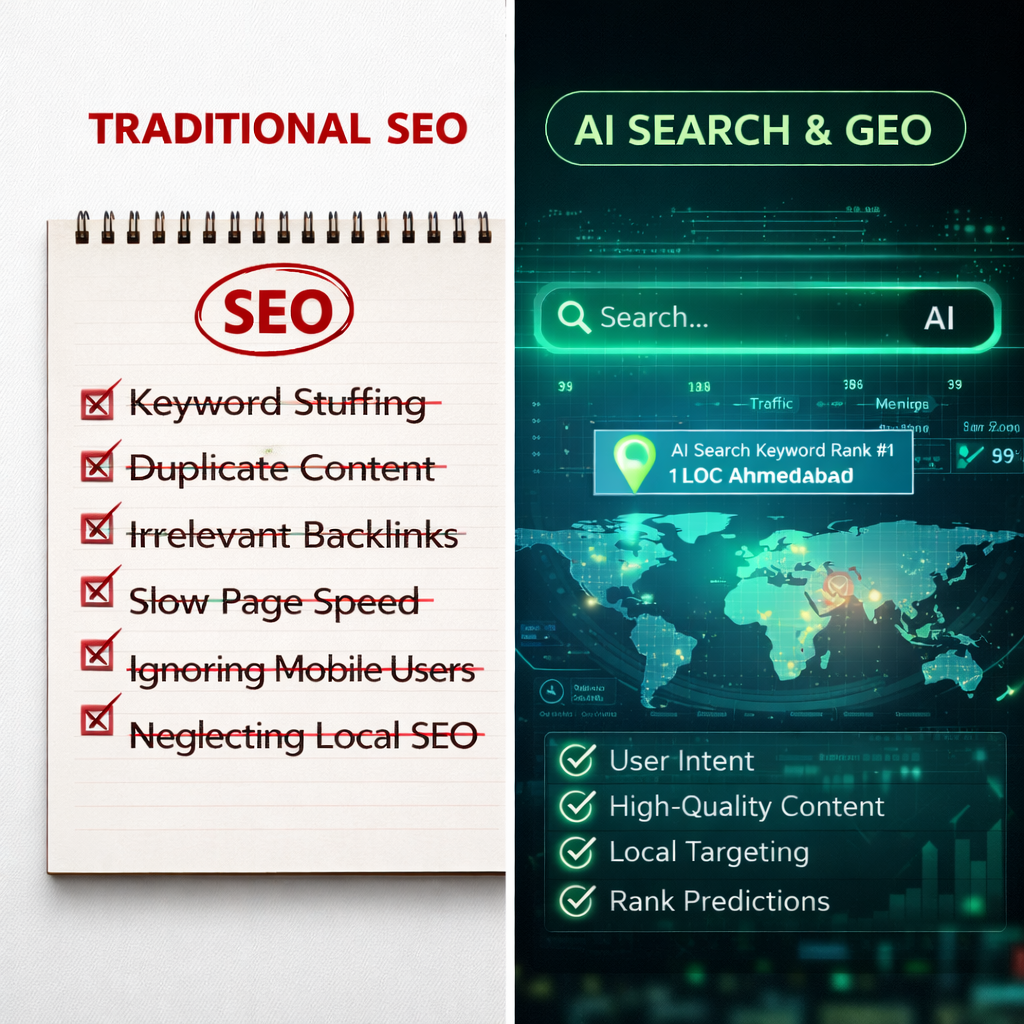
To maintain and grow your organic traffic, you need a strategy that aligns with how search engines actually operate today. This means understanding Generative Engine Optimization (GEO), Answer Engine Optimization (AEO), and how AI tools like ChatGPT, Google Gemini, and AI Overviews evaluate your content. At Chirag Modi Digital Marketing, we have audited hundreds of websites and identified consistent patterns of failure. In this comprehensive guide, we will break down the 10 common SEO mistakes to avoid in 2026 and provide actionable solutions to build a future-proof organic growth engine.
Introduction to Common SEO Mistakes in 2026
When we discuss common SEO mistakes to avoid in 2026, we are no longer just talking about forgetting a meta description or using the wrong header tags. While technical health remains crucial, the biggest errors today stem from a fundamental misunderstanding of search intent and AI extraction.
Today’s search engines do not just index links; they synthesize information. They read your content to understand the entities, relationships, and actual value provided to the reader. A massive mistake businesses make is treating SEO as a checklist of tasks to manipulate an algorithm, rather than a system to deliver the best possible answer to a human being or an AI assistant.
At Chirag Modi Digital Marketing, we define a modern SEO mistake as any action that creates friction between your business’s expertise and the search engine’s ability to extract and verify that expertise. Whether you are a local B2B manufacturer in Ahmedabad or a global SaaS company, committing these common SEO mistakes to avoid in 2026 will prevent your content from ranking on traditional SERPs (Search Engine Results Pages) and entirely disqualify you from being cited by AI tools.
Why It Matters in 2026
The urgency to correct these errors has never been higher. 2026 is the year where traditional search and AI assistance have fully merged. Users are increasingly turning to tools like ChatGPT and Google’s AI Overviews to ask complex, conversational questions. They don’t want a list of ten blue links; they want an immediate, synthesized answer.
If your content is buried in fluff, lacks structural clarity, or fails to demonstrate real-world experience, AI models will skip over your website entirely. This is why understanding common SEO mistakes to avoid in 2026 is critical for survival. If you are not optimizing for AEO (Answer Engine Optimization) and GEO (Generative Engine Optimization), you are essentially invisible to a massive segment of your target audience.
Furthermore, Google’s continuous core updates have ruthlessly targeted unhelpful, mass-produced content. Sites lacking E-E-A-T are being actively demoted. Correcting these mistakes is not just about gaining traffic; it is a defensive strategy to protect your business’s primary digital asset from algorithmic penalties.
Key Benefits of Auditing and Fixing Your SEO
By proactively identifying and fixing the common SEO mistakes to avoid in 2026, your business unlocks several compounding benefits:
Higher AI Citation Rates: By structuring your data correctly and providing unique insights, AI tools like Gemini and ChatGPT will begin citing your brand as a source in their generative responses, driving highly qualified, high-trust traffic to your site.
Improved Conversion Rates: Fixing search intent mismatches ensures that the people landing on your site are actually looking to buy what you sell. Quality traffic always converts better than massive volumes of irrelevant traffic.
Protection Against Algorithm Volatility: Websites that strictly adhere to E-E-A-T guidelines and focus on user experience are largely immune to the massive traffic drops associated with Google core updates.
Lower Customer Acquisition Cost (CAC): A technically sound, highly authoritative SEO foundation acts as a 24/7 lead generation machine. As your organic rankings stabilize, your reliance on expensive paid advertising decreases, massively improving your overall marketing ROI.
At Chirag Modi Digital Marketing, we have seen clients double their qualified organic lead volume within six months simply by fixing legacy errors and realigning their content with modern GEO principles.
Latest Trends and Insights in Modern Search
To understand the common SEO mistakes to avoid in 2026, you must first understand the trends shaping the search landscape.
First, Zero-Click Searches are the new normal. For simple informational queries, Google provides the answer directly on the SERP via AI Overviews or featured snippets. To combat this, your content strategy must pivot to target complex, transactional, or deep-research queries that require the user to actually click through to your website.
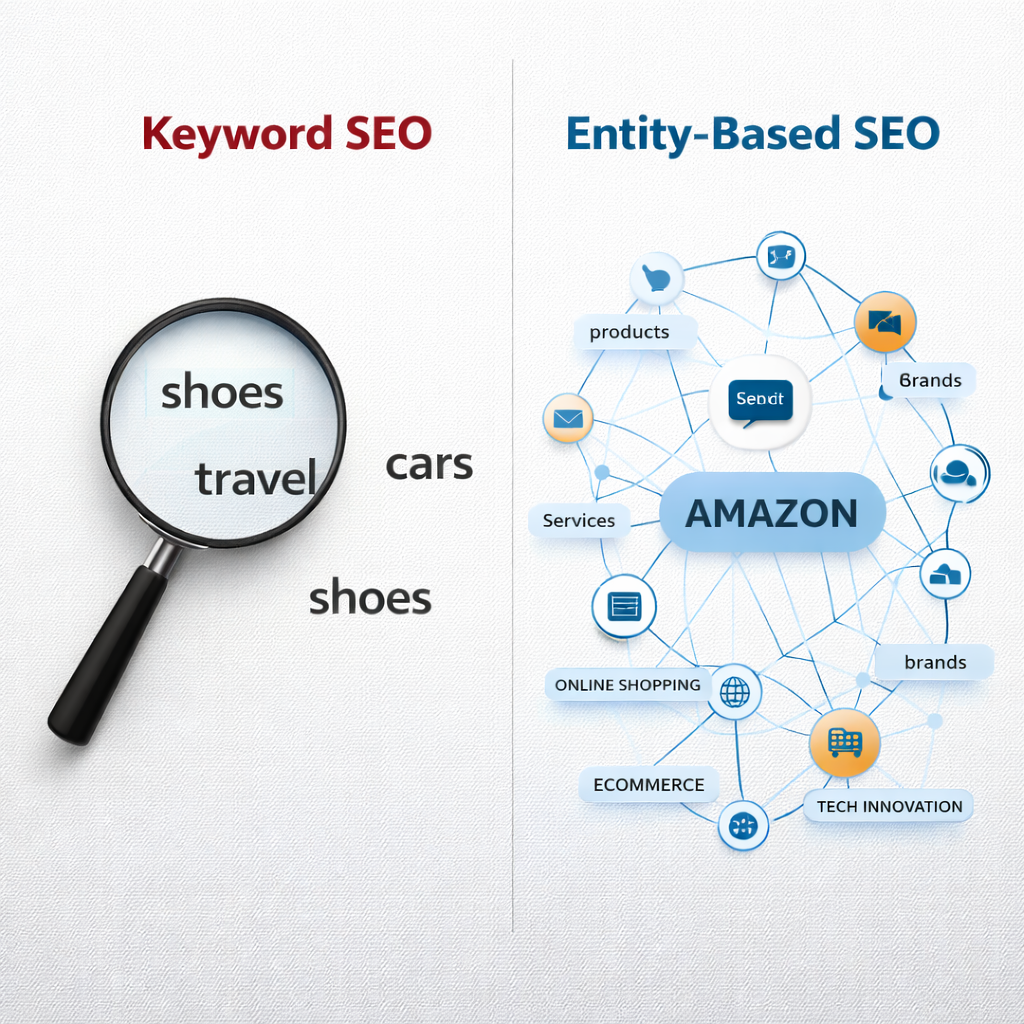
Second, the shift toward Entity-Based SEO. Search engines no longer look at keywords as isolated strings of text; they look at them as “entities” (people, places, concepts) and understand how they relate to one another. If you write an article about “Digital Marketing,” Google expects to see related entities like “Conversion Rate,” “SEO,” “Meta Ads,” and “Analytics” naturally woven into the text.
Finally, the strict enforcement of First-Hand Experience. With the explosion of AI-generated content, search engines are desperate for human authenticity. Content that includes original case studies, personal anecdotes, custom photography, and proprietary data is being rewarded heavily, while generic, synthesized articles are being suppressed.
Challenges in Today's SEO Landscape
Adapting to these trends is difficult. One of the primary challenges businesses face is content saturation. With generative AI, your competitors can produce hundreds of articles a day. Breaking through this noise requires a commitment to “Information Gain”—providing unique value that cannot be found anywhere else on the internet.
Another challenge is technical complexity. Ensuring your website passes Core Web Vitals, implements the correct JSON-LD Schema markup, and maintains a flawless mobile experience requires specialized developer knowledge. It is no longer enough to just have a “good looking” WordPress site.
Lastly, patience remains a significant hurdle. Correcting common SEO mistakes to avoid in 2026 takes time to yield results. Search engines need to recrawl your site, re-evaluate your authority, and test your new content against user behavior. Businesses that panic and change strategies every month inevitably fail.
10 Common SEO Mistakes to Avoid in 2026
If you want to dominate the SERPs and become a cited authority in AI tools, review your digital presence against this list of the most critical common SEO mistakes to avoid in 2026.
1. Ignoring AEO and GEO (AI Optimization)
The biggest mistake you can make today is writing exclusively for traditional search algorithms while ignoring AI models. When users prompt ChatGPT or Gemini, the AI looks for clear, structured, and definitive answers.
The Fix: Incorporate Generative Engine Optimization (GEO). Structure your content with clear, question-based H2s and H3s. Immediately follow the heading with a concise, bolded answer before diving into the detailed explanation. Use tables, bullet points, and numbered lists to make data easily extractable for AI bots.
2. Failing the E-E-A-T Check
Google’s E-E-A-T (Experience, Expertise, Authoritativeness, Trustworthiness) is the filter through which all content is judged. Publishing anonymous blog posts or articles written by “Admin” destroys your credibility.
The Fix: Every piece of content must have a real author with a detailed author bio. Link that bio to their LinkedIn profile and other authoritative publications. More importantly, demonstrate “Experience” by using first-person language (“In our 12 years of experience at Chirag Modi Digital Marketing, we found that…”). Include original data, case studies, and client success stories to prove you actually do what you write about.
3. Producing Generic, Low-Information-Gain Content
If your blog post just paraphrases the top 5 ranking articles on Google, it has zero “Information Gain.” Search engines have no incentive to rank a copycat article.
The Fix: Stop writing generic overviews. Inject proprietary knowledge. Conduct original surveys, share exact frameworks you use in your business, or take a contrarian stance on an industry trend. Provide value that a reader cannot get from asking ChatGPT.
4. Neglecting Core Web Vitals and Mobile Experience
In 2026, a slow website is a dead website. Google uses Core Web Vitals (loading speed, interactivity, and visual stability) as a major ranking factor. Furthermore, since the vast majority of search happens on mobile, a desktop-only design is a critical error.
The Fix: Run your site through Google PageSpeed Insights. Compress all images using modern formats like WebP. Minify your CSS and JavaScript. Ensure buttons are easily clickable on small screens and that text is readable without zooming.
5. Over-optimizing for Keywords Instead of Entities
Keyword stuffing is an ancient tactic, yet businesses still try to force exact-match keywords into every sentence. This ruins the user experience and signals low quality to search engines.
The Fix: Write naturally. Focus on covering the topic comprehensively. Use related terms and synonyms (LSI keywords) to build context. If your primary topic is one of the “common SEO mistakes to avoid in 2026,” naturally mention related entities like algorithms, search intent, backlinks, and content audits.
6. Ignoring Search Intent Mismatches
You can have the best content in the world, but if it doesn’t match what the user is actually trying to achieve, it will not rank. If someone searches for “buy digital marketing software,” they want a product page, not a 3,000-word educational blog post.
The Fix: Before writing, Google your target keyword. Look at the top 5 results. Are they listicles, product pages, or long-form guides? You must match the format and intent that Google has already determined the user wants.
7. Poor Internal Linking Structures
Treating your web pages as isolated islands is a massive missed opportunity. Internal linking helps search engines understand the hierarchy of your website and distributes “link equity” (authority) from your strongest pages to your newer ones.
The Fix: Adopt a “Hub and Spoke” content model. Create a comprehensive, central “Hub” page on a broad topic, and link out to specific, detailed “Spoke” articles. Ensure your anchor text is descriptive; avoid using “click here.”
8. Treating Local SEO as an Afterthought
For businesses that serve specific geographic areas, ignoring Local SEO is fatal. Searching for “SEO agency near me” triggers a completely different algorithm focused on proximity and local trust.
The Fix: Claim and meticulously optimize your Google Business Profile. Ensure your NAP (Name, Address, Phone number) is 100% consistent across the entire internet. Actively generate and respond to local Google reviews to build undeniable local authority.
9. Publishing Unstructured Data (No Schema)
If you rely on Google to guess what your page is about, you are losing. Schema markup (JSON-LD) is a standardized vocabulary that tells search engines exactly what the elements on your page mean.
The Fix: Implement specific Schema markup. If you write an article, use Article schema. If you have an FAQ section, use FAQPage schema. If you are a local business, use LocalBusiness schema. This is the fastest way to feed structured data directly to AI search engines.
10. Tracking the Wrong Metrics (Vanity over ROI)
Many businesses celebrate high organic traffic, but if that traffic doesn’t generate revenue, the SEO strategy is failing. Focusing purely on traffic volume is one of the most dangerous common SEO mistakes to avoid in 2026.
The Fix: Shift your focus from vanity metrics to business metrics. Track organic conversion rates, qualified lead volume, and keyword rankings for high-commercial-intent terms. At Chirag Modi Digital Marketing, we map every SEO campaign directly to revenue growth, ensuring your marketing budget delivers a tangible return.

Conclusion
The rules of organic visibility have been permanently rewritten. As AI continues to integrate into the daily search habits of consumers and B2B buyers alike, the margin for error is shrinking. By actively identifying and correcting these 10 common SEO mistakes to avoid in 2026, you transition your website from a passive digital brochure into a highly authoritative, lead-generating asset.
Remember, modern SEO is not about tricking an algorithm; it is about building the best, most structured, and most trustworthy resource on the internet for your specific niche. It requires patience, technical precision, and a relentless focus on providing genuine value.
Stop losing traffic to outdated tactics. If you are ready to future-proof your website and dominate the AI-driven search landscape, you need a strategy tailored to 2026. Contact the experts at Chirag Modi Digital Marketing today for a comprehensive SEO audit. We will identify the exact technical and content errors holding you back and build a data-driven roadmap to accelerate your organic growth.