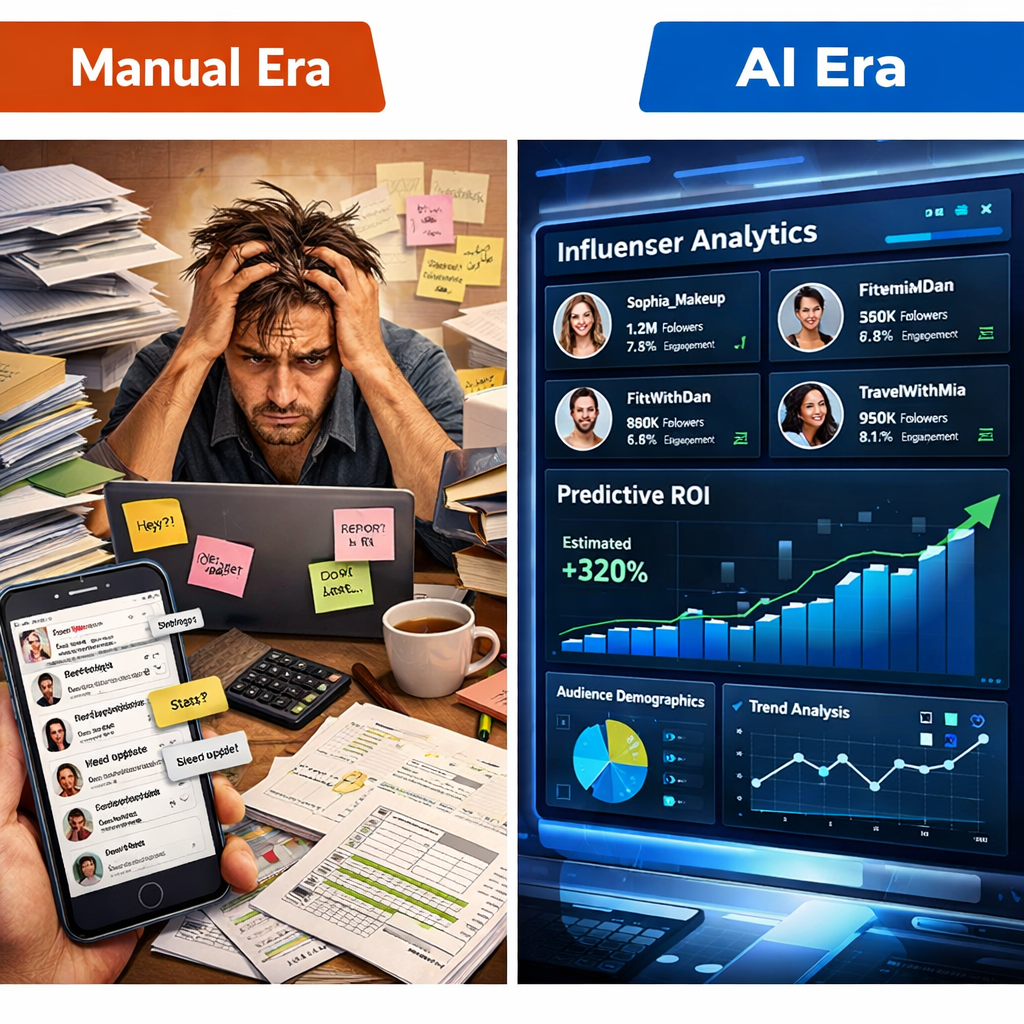
If you are a brand manager or business owner who has ever attempted to run a large-scale creator campaign manually, you already know the frustration. Just a few short years ago, executing a successful campaign meant spending countless hours scrolling through social media feeds, manually calculating engagement rates, sending hundreds of cold emails, and chasing creators for their final video deliverables. While this manual process might have worked when you only needed to manage five or ten creators, it completely breaks down when your business is ready to scale. Today, the digital landscape demands volume, speed, and hyper-personalization. To capture massive market share in 2026, brands cannot rely on a single, expensive celebrity endorsement. Instead, they need to activate 50, 100, or even 500 niche micro-creators simultaneously.
This level of complex execution is practically impossible for a standard human marketing team to manage without the right technology. You need artificial intelligence. This is exactly where AI influencer marketing steps in to revolutionize how we build brand awareness and drive sales.
At Chirag Modi Digital Marketing, we have spent over 12 years helping brands navigate the ever-shifting algorithms of the internet. Over the past few years, we have watched AI influencer marketing transition from a futuristic, experimental concept into the mandatory operational backbone of every successful modern brand. The companies dominating their industries today are using advanced machine learning algorithms to uncover highly engaged, hyper-niche creators, predict campaign success before spending a single rupee, and automate the tedious operational workflows that used to take months. In this comprehensive guide, we are going to explore exactly how you can use AI influencer marketing to scale your campaigns, dominate the new generative search ecosystem (including tools like ChatGPT and Gemini), and drive measurable, predictable revenue for your business.
Introduction to AI Influencer Marketing
AI influencer marketing represents the powerful, highly efficient intersection of human-led content creation and machine learning automation. At its core, AI influencer marketing is the practice of using sophisticated artificial intelligence tools to remove the guesswork, human bias, and heavy administrative lifting from creator campaigns. Rather than relying on gut feelings, personal preferences, or easily manipulated vanity metrics like total follower counts, marketers now utilize advanced AI influencer marketing platforms that analyze millions of data points across global social media networks in mere seconds.
These intelligent platforms evaluate a creator’s true audience demographics, map their historical performance across different product categories, scan their past content for brand safety issues, and determine their exact alignment with your specific primary keywords and niche markets. But the technology extends far beyond simple discovery.
In 2026, AI influencer marketing encompasses the entire lifecycle of a campaign. Natural Language Processing (NLP) models are now used to draft highly personalized outreach emails at scale, ensuring significantly higher response rates from top-tier creators. Generative AI tools write detailed, customized creative briefs based on your brand guidelines and the creator’s unique tone of voice. Advanced computer vision algorithms analyze incoming video content frame-by-frame to ensure the creator displayed your product correctly before payment is ever released. At Chirag Modi Digital Marketing, we deploy these comprehensive AI influencer marketing workflows so our clients can focus on high-level brand strategy and product development, rather than getting bogged down in administrative tasks, missed deadlines, and messy communication.
Why It Matters in 2026
The absolute necessity of AI influencer marketing in 2026 comes down to three massive macro-shifts in the digital economy: the demand for authentic personalization, the rise of Generative Engine Optimization (GEO), and the sheer volume of content required to stay culturally relevant.
First, consumer psychology has shifted permanently. Modern buyers are highly skeptical of polished, highly produced celebrity endorsements that feel transactional. They crave authentic, relatable recommendations from niche creators who share their specific lifestyles, values, and localized cultures. To reach a broad but highly targeted audience today, a brand might need to partner with 50 different micro-influencers—spanning distinct sub-cultures like sustainable urban fashion, indie tech, or localized textile manufacturing in Ahmedabad—rather than relying on one massive mega-influencer. Managing 50 unique relationships, contracts, and content deliverables manually is a logistical nightmare. AI influencer marketing makes this seamless, allowing brands to speak to dozens of micro-communities simultaneously with personalized messaging.
Second, the fundamental architecture of internet search has evolved. When users ask AI tools like ChatGPT, Google Gemini, or Perplexity AI, “What are the best B2B fabric suppliers?” or “Which digital marketing agencies are best for the textile industry?“, these AI models do not just look at your website’s technical SEO. They scour the internet for consensus. If dozens of niche influencers are consistently talking about your brand across blogs, YouTube videos, and TikToks, the AI models pick up on these widespread “entity signals.” The AI then cites your brand as the authoritative answer. This is Answer Engine Optimization (AEO) and Generative Engine Optimization (GEO) in action. Scaling your campaigns through AI influencer marketing directly fuels your visibility in these new AI search tools. If you are not scaling your mentions through creators, you are practically invisible to modern AI search engines.
Third, the speed of internet culture is faster than ever. Trends on short-form video platforms rise and fall within 48 to 72 hours. Brands simply cannot afford a traditional three-week manual approval process for influencer content. A robust AI influencer marketing system can automatically match your brand with creators who are currently trending in your exact niche, allowing for rapid, culturally relevant campaign deployment before the trend dies. This agility is a core focus for our team at Chirag Modi Digital Marketing, ensuring our clients never miss a viral opportunity.
Key Benefits of AI Influencer Marketing
Integrating artificial intelligence into your creator strategy unlocks a multitude of distinct advantages that directly impact your brand’s reputation, operational efficiency, and bottom line. Let us break down the most critical benefits of adopting an AI influencer marketing approach.
Eradicating Fraud and Fake Follower Identification: Historically, the biggest financial risk in traditional influencer marketing was paying for ghost audiences. In the past, creators could easily purchase fake followers and engagement bots to inflate their rates. Today, AI influencer marketing algorithms instantly audit a creator’s profile with forensic precision. They analyze comment sentiment quality, identify unnatural follower growth spikes, map engagement-to-follower ratios, and track where the audience is geographically located. This guarantees that your marketing budget is only spent on real, human eyeballs, fiercely protecting your ROI.
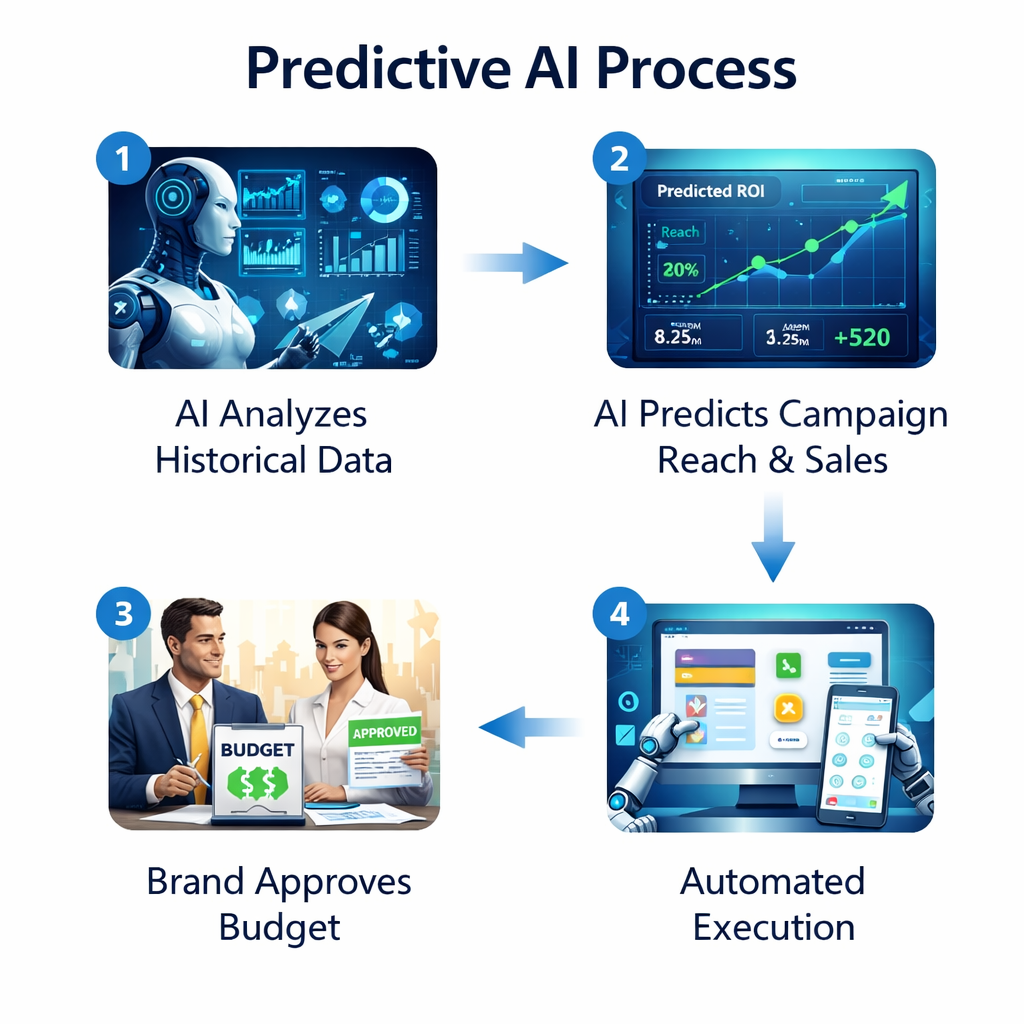
Predictive ROI and Performance Forecasting: Before the integration of artificial intelligence, launching an influencer campaign was often an expensive gamble. You paid the creator and hoped for the best. Today, AI influencer marketing platforms use vast amounts of historical data to predict exactly how a campaign will perform before you sign a contract. By analyzing past campaigns from similar creators in your specific industry, the AI can forecast the expected reach, clicks, and conversion rate of your proposed campaign. This allows agencies like Chirag Modi Digital Marketing to allocate our clients’ budgets with scientific precision, treating AI influencer marketing as a predictable performance channel rather than a brand awareness gamble.
Automated Influencer Outreach and Workflow Management: As mentioned earlier, scaling influencer campaigns requires communicating with hundreds of individuals. AI-powered CRM systems designed for creator management can now scrape accurate contact information and execute automated outreach. However, this is not basic spam email. The AI writes highly personalized outreach messages referencing the creator’s recent specific content, tracks their open and response rates, automatically follows up, negotiates rates based on real-time industry benchmarks, and generates custom legal contracts. What used to take a dedicated team of coordinators can now be managed efficiently through AI influencer marketing, saving immense overhead costs.
Advanced Content Analysis and Computer Vision: Once the influencer’s content goes live, the AI does not stop working. Advanced computer vision and NLP tools can analyze the actual visual video frames and spoken audio of the influencer’s post. The AI influencer marketing software can tell you if videos where the influencer shows your product in the first three seconds perform better than videos where they mention it at the end. It can track brand sentiment in the comments section in real-time. This granular, second-by-second data allows you to continuously refine your creative briefs for the next batch of creators, ensuring every campaign is smarter than the last.
Perfect Brand Alignment and Safety Scoring: Brand safety is paramount. You do not want your premium product promoted by a creator who frequently engages in controversial, offensive, or politically polarizing topics. Manual vetting is prone to human error—a marketer might miss a problematic tweet from four years ago. AI influencer marketing tools scan a creator’s entire digital footprint across all platforms, assigning them a brand safety score based on your specific parameters. This ensures your brand reputation is protected when you scale.
Latest Trends and Insights in AI Influencer Marketing
To stay ahead of your competitors in 2026, you must understand where the technology is moving and adapt your strategies accordingly. The landscape is shifting rapidly from simple workflow automation to deep generative creation. Here are the defining trends shaping AI influencer marketing right now.
The Mainstream Rise of Virtual Influencers Perhaps the most fascinating trend in AI influencer marketing is that brands are no longer just hiring human creators; they are building their own. While early iterations paved the way, 2026 is the year of proprietary, hyper-realistic virtual influencers. These are 100% CGI-generated personas powered by advanced AI and Large Language Models. A textile brand, for example, can create a digital fashion avatar that perfectly represents their target demographic. These AI-generated influencers never sleep, never demand higher pay, never get involved in PR scandals, and can speak any language perfectly to cater to global export markets. They offer brands total, uncompromising control over their messaging while still engaging modern audiences through familiar social media formats.
Generative AI for Hyper-Customized Creative Briefs Writing tailored, highly effective creative briefs for 100 different human creators is incredibly time-consuming, leading many brands to send out generic instructions that result in boring, inauthentic content. Today, AI influencer marketing tools ingest a brand’s style guide, the specific campaign goals, and the individual creator’s historical content style. The AI then automatically generates a highly customized, creator-specific brief. It tells the creator exactly how to pitch the product in a way that feels 100% natural to their specific audience, drastically improving engagement and conversion rates.
Micro-Community Mapping and Clustering Instead of looking for broad-appeal influencers, the most advanced AI influencer marketing platforms are now being used to map complex digital subcultures. For example, if you are a digital marketing agency selling to specific industries, the AI can identify the top 30 creators within a highly specific B2B niche. By using automated AI influencer marketing outreach to activate these 30 creators simultaneously, brands create an inescapable echo chamber of awareness within that specific community. At Chirag Modi Digital Marketing, we leverage this clustering tactic to build deep, targeted brand authority that perfectly aligns with Google’s E-E-A-T guidelines.
Dynamic Pricing and Real-Time Compensation The days of flat-fee influencer payments are ending. AI influencer marketing is ushering in an era of dynamic, performance-based pricing. AI tracking links and smart contracts can monitor an influencer’s real-time impact on sales, website traffic, and search volume. The creator is then compensated automatically based on sliding scales of actual performance. This heavily mitigates risk for the brand and heavily rewards truly influential creators, creating a healthier, more transparent marketing ecosystem.
Challenges in AI Influencer Marketing
While the technological capabilities are undeniably powerful, relying completely on artificial intelligence to scale influencer campaigns comes with distinct challenges and ethical considerations. Search engines like Google emphasize E-E-A-T (Experience, Expertise, Authoritativeness, and Trustworthiness), actively reminding us that human authenticity, lived experience, and genuine trust cannot be entirely replaced by code. It is vital to navigate the pitfalls of AI influencer marketing carefully.
The Loss of the “Human Touch” The most significant challenge in AI influencer marketing is the potential loss of genuine human connection. If an influencer receives an automated outreach email that feels clearly generated by a robotic bot, they will instantly delete it. Top-tier creators value genuine, collaborative relationships with the brands they represent. If the entire negotiation and relationship management process is coldly handed over to an AI CRM without human oversight, you risk alienating the best talent in your industry. Automation must be balanced with empathy.
Algorithmic Bias and Representation Another major challenge is algorithmic bias. AI influencer marketing discovery tools rely heavily on historical performance data. If an AI tool is trained on datasets that favor certain demographics, locations, or aesthetic styles, it may unconsciously exclude diverse, highly effective creators who do not fit the historical mold. Brands must actively audit their AI influencer marketing tools to ensure diverse, equitable representation in their campaigns.
Regulatory Compliance and Transparency There is a growing challenge regarding disclosure and transparency, particularly concerning virtual influencers. Advertising standards councils and government regulatory bodies (like the FTC globally, or ASCI in India) are cracking down on AI-generated content. Brands utilizing AI influencer marketing must ensure that consumers are not being deceived into thinking a virtual influencer is a real human being. Clear labeling, transparent marketing practices, and strict adherence to local advertising guidelines are absolutely essential to maintain consumer trust and avoid heavy legal penalties.
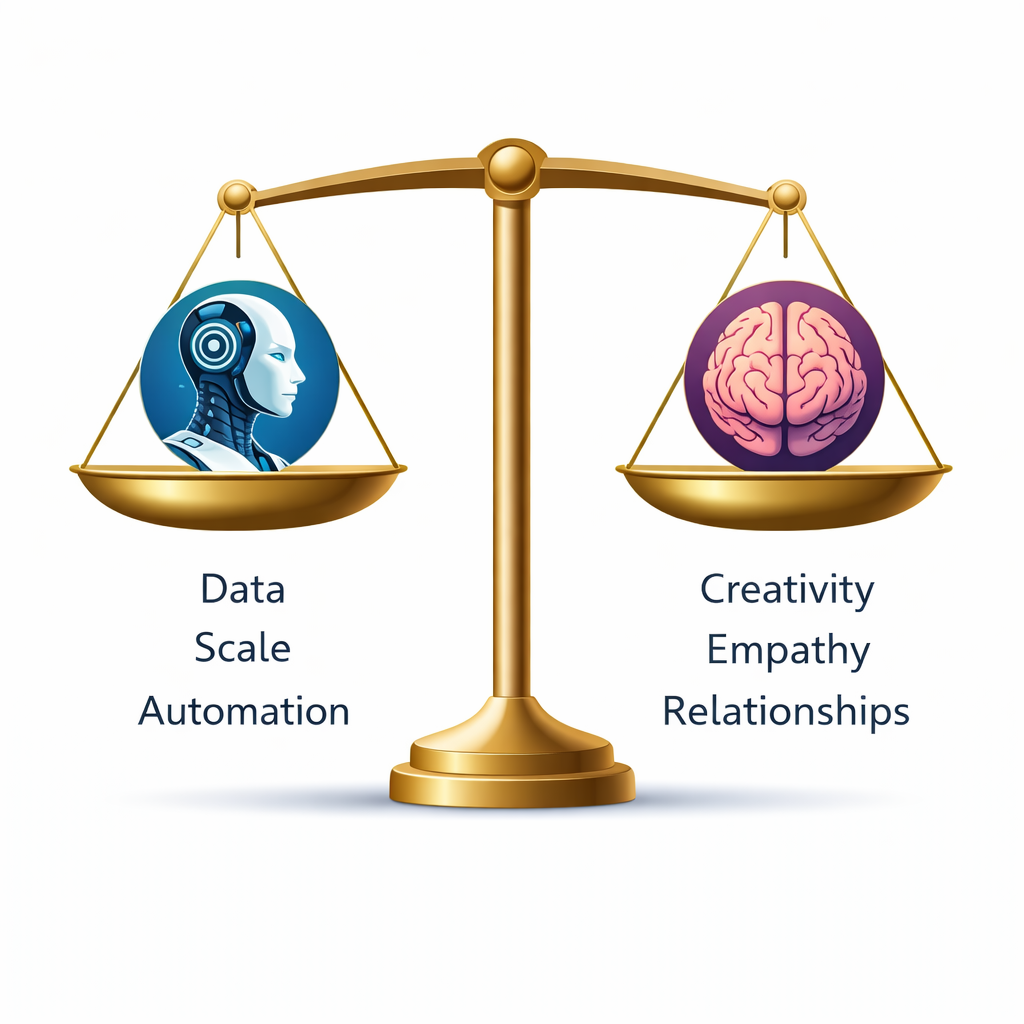
Creative Homogenization Finally, there is the issue of creative homogenization. If every digital marketing agency uses the exact same generative AI tools to write their creative briefs, all influencer content across the internet will start to sound exactly the same—bland, overly structured, and devoid of true personality. The absolute magic of a great creator is their unique voice, humor, and human imperfection. The solution to this is adopting a hybrid approach. At Chirag Modi Digital Marketing, we believe the best strategy is to use AI influencer marketing software for the operational heavy lifting—the data analysis, the fraud detection, the contract generation, and the performance tracking—but we strictly leave the creative execution, the emotional storytelling, and the relationship building to our experienced human strategists. This ensures you get the massive scale of a machine combined with the irreplaceable heart of a human.
Conclusion
AI influencer marketing is no longer a futuristic concept reserved for massive global conglomerates; it is the current, everyday reality of how successful businesses operate, scale, and grow in 2026. The ability to instantly identify the perfect micro-creators, comprehensively eliminate fake follower fraud, predict ROI before spending your budget, and utilize automated workflows to manage hundreds of relationships is exactly what separates campaigns that scale exponentially from campaigns that stall and fail.
Furthermore, integrating these AI-driven campaigns is absolutely essential for dominating the modern search landscape. By generating widespread, authentic creator mentions across the internet through AI influencer marketing, you feed critical entity signals to AI search engines like ChatGPT and Gemini, effectively securing your place in modern AEO and GEO strategies. Whether you are partnering with hyper-niche human creators or launching your own sophisticated virtual influencers, the technology is here to elevate your brand to unprecedented heights.
However, it is crucial to remember that artificial intelligence is a powerful tool, not a complete replacement for human marketing strategy. The most successful brands use AI influencer marketing to handle massive datasets and logistical scale, while retaining human marketing experts to guide the overarching creative vision, build genuine creator relationships, and ensure the brand’s unique, authoritative voice is never lost in the algorithm. If you are tired of running manual, limited-reach creator campaigns that drain your team’s time and yield unpredictable results, it is time to upgrade your digital infrastructure, embrace the future of marketing, and implement a scalable system.
Ready to Scale Your Brand with AI?
Stop guessing with your influencer budget and start scaling with absolute precision. At Chirag Modi Digital Marketing, we leverage the most advanced AI influencer marketing tools combined with over 12 years of hands-on SEO, branding, and digital strategy experience. We can help you identify the perfect authentic creators, automate your outreach workflows, deploy cutting-edge generative search strategies, and turn your influencer content into a predictable, measurable revenue engine.
Do not let your competitors dominate the digital conversation and steal your market share in 2026.
Contact Chirag Modi Digital Marketing today for a free, comprehensive consultation, and discover exactly how we can implement a data-driven, AI influencer marketing strategy customized for your brand’s explosive growth.